
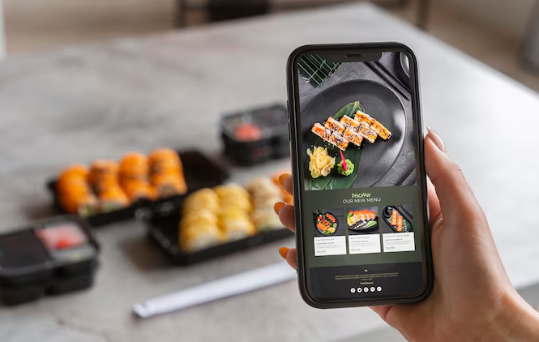
The food delivery industry has experienced a massive digital transformation over the past decade. With the increasing use of smartphones and online ordering platforms, restaurants are rapidly adopting technology to meet changing consumer expectations. Among the most impactful innovations in this sector is the emergence of AI food delivery apps.
Artificial intelligence is revolutionizing how food businesses manage orders, deliver meals, interact with customers, and optimize operations. AI-powered systems can analyze vast amounts of data, automate repetitive tasks, and provide intelligent recommendations that improve both efficiency and customer satisfaction.
For restaurants, cloud kitchens, and food startups, AI-driven delivery platforms are becoming essential tools for staying competitive in a crowded market. In this article, we explore how AI food delivery apps are transforming the food service industry and why businesses are increasingly investing in this technology.
The Growing Role of AI in Food Delivery
Food delivery platforms initially started as simple systems that allowed customers to browse menus and place orders online. However, modern AI-powered food delivery apps offer far more advanced capabilities.
Artificial intelligence enables platforms to learn from customer behavior, predict demand patterns, and automate operational processes. These capabilities help restaurants improve efficiency while delivering faster and more personalized experiences to customers.
Some of the most common AI technologies used in food delivery apps include:
- Machine learning algorithms
- Predictive analytics
- Intelligent route optimization
- AI chatbots for customer support
- Smart recommendation engines
These technologies work together to create smarter delivery ecosystems that benefit both customers and food businesses.
Personalized Ordering Experiences for Customers
One of the most noticeable benefits of AI food delivery apps is personalization.
AI systems analyze customer data such as previous orders, favorite cuisines, dietary preferences, and ordering habits. Based on this information, the app can recommend relevant dishes, restaurants, or special offers.
For example, if a customer frequently orders Italian food on weekends, the app may highlight Italian restaurants or promote new pasta dishes during those times.
This level of personalization improves customer engagement and encourages repeat orders. Restaurants benefit from higher order values and increased customer loyalty.
Personalized experiences are becoming a key competitive advantage in the online food delivery industry.
Smarter Order Management for Restaurants
Restaurants often struggle with managing high volumes of delivery orders, especially during peak hours. Manual order tracking and coordination between kitchen staff and delivery drivers can lead to errors and delays.
AI-powered food delivery automation systems simplify this process by intelligently managing incoming orders.
These systems can automatically:
- Prioritize orders based on preparation time
- Assign tasks to kitchen stations
- Track order progress in real time
- Notify delivery partners when food is ready
By automating these processes, restaurants can reduce operational stress and improve overall efficiency.
Staff members can focus more on food preparation and quality service instead of managing administrative tasks.
AI Delivery Route Optimization
Fast and reliable delivery is critical for customer satisfaction in food delivery services. Late deliveries can negatively affect restaurant ratings and customer trust.
AI-based delivery route optimization helps solve this challenge by calculating the most efficient delivery paths in real time.
AI algorithms analyze factors such as:
- Traffic conditions
- Weather updates
- Distance between locations
- Driver availability
Using this information, the system selects the fastest route for delivery drivers.
This reduces delivery times, lowers fuel costs, and improves the overall delivery experience for customers.
Efficient delivery logistics also allow restaurants to handle a higher number of orders without compromising service quality.
Demand Forecasting with AI
AI technology enables restaurants to make better decisions through predictive analytics.
AI-powered systems analyze historical data, customer behavior, and seasonal trends to forecast demand patterns.
Restaurants can use these insights to predict:
- Peak ordering hours
- High-demand menu items
- Busy days of the week
- Popular cuisines in specific locations
With accurate demand forecasts, restaurants can prepare ingredients in advance, schedule staff effectively, and avoid kitchen bottlenecks.
This proactive planning helps reduce food waste and ensures smoother operations during busy periods.
AI Chatbots for Customer Support
Customer support is another important component of food delivery platforms. AI chatbots are increasingly being integrated into food delivery apps to provide instant assistance.
These chatbots can handle common customer requests such as:
- Order tracking
- Delivery status updates
- Menu inquiries
- Payment issues
AI chatbots are available 24/7 and can respond to customer queries instantly.
This improves the user experience while reducing the workload on human support teams.
For restaurants and food delivery platforms, automated support systems help maintain high service standards without significantly increasing operational costs.
Data-Driven Insights for Restaurant Growth
AI food delivery apps generate valuable business insights through data analytics.
Restaurants can access detailed reports on:
- Best-selling menu items
- Customer ordering patterns
- Peak business hours
- Delivery performance metrics
These insights help restaurant owners understand what works and what needs improvement.
For example, if certain menu items consistently perform well, restaurants can promote them more aggressively or create similar dishes.
Data-driven decision-making allows food businesses to optimize their menus, pricing strategies, and marketing campaigns.
Supporting the Growth of Cloud Kitchens
The rise of cloud kitchens has further increased the importance of AI-powered food delivery technology.
Cloud kitchens operate without dine-in spaces and rely entirely on delivery orders. Efficient digital systems are essential for managing large volumes of online orders.
AI delivery platforms help cloud kitchens:
- Optimize kitchen workflows
- Analyze customer demand in different regions
- Manage multiple brands from a single kitchen
By leveraging AI technology, cloud kitchens can scale their operations quickly while maintaining consistent service quality.
Marketing Automation with AI
Marketing is another area where AI food delivery apps provide significant value.
AI-powered marketing tools allow restaurants to run targeted promotional campaigns based on customer behavior.
For example, AI systems can automatically send:
- Discount offers to inactive customers
- Personalized meal recommendations
- Special promotions during off-peak hours
Targeted marketing campaigns are more effective than generic promotions because they reach customers who are most likely to place orders.
This leads to higher conversion rates and improved return on marketing investment.
Building Scalable Food Delivery Platforms
As the food delivery market continues to expand, restaurants need scalable technology solutions that can handle growing demand.
Developing intelligent platforms requires expertise in AI technologies, mobile app development, and delivery logistics systems.
Businesses looking to build advanced delivery platforms often collaborate with companies specializing in AI food delivery app development to create customized solutions that match their operational requirements.
These platforms integrate AI capabilities such as predictive analytics, automated order management, and smart delivery optimization.
Such solutions enable restaurants to operate more efficiently while providing superior customer experiences.
The Future of AI Food Delivery Apps
The role of AI in food delivery will continue to grow as technology advances.
Future innovations may include:
- Voice-based food ordering
- AI-powered kitchen automation
- Drone and autonomous delivery systems
- Hyper-personalized dining recommendations
These technologies will further transform how food businesses interact with customers and manage operations.
Restaurants that adopt AI-driven delivery platforms early will be better positioned to take advantage of these innovations.
Conclusion
AI food delivery apps are reshaping the restaurant industry by introducing smarter, faster, and more efficient ways to manage online food services. From personalized recommendations and automated order management to delivery route optimization and predictive demand forecasting, AI technology offers numerous benefits for restaurants and food businesses.
As customer expectations continue to evolve, investing in intelligent delivery platforms is becoming essential for long-term success in the food service industry.
By leveraging AI-powered solutions, restaurants can streamline operations, enhance customer experiences, and unlock new growth opportunities in the rapidly expanding digital food delivery market.