
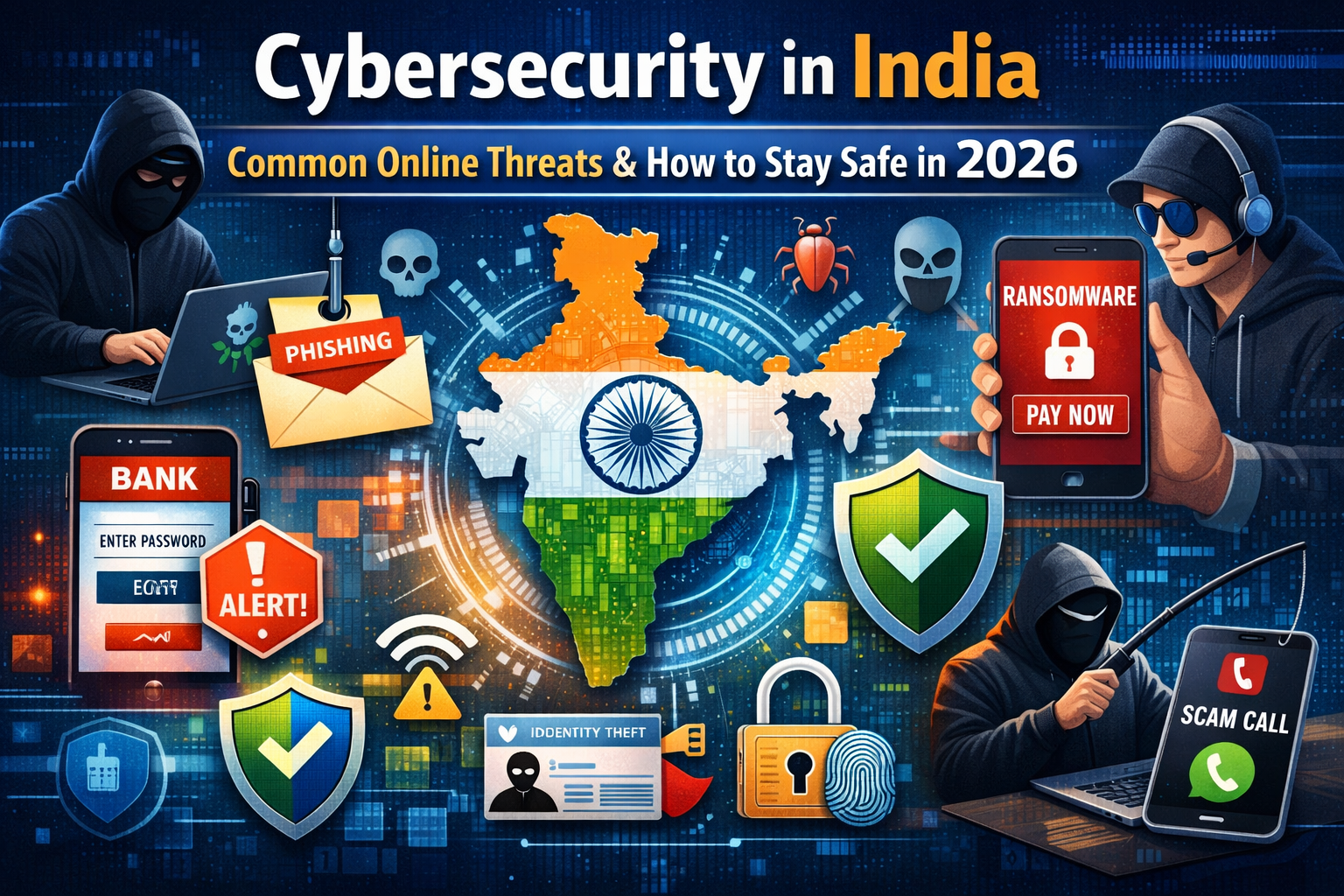
In the digital age, India is rapidly becoming one of the largest internet markets in the world. With millions of users going online for banking, shopping, education, and entertainment, cybersecurity has become more critical than ever. As we step into 2026, understanding common online threats and how to protect yourself is essential to stay safe in the digital world.
Common Online Threats in India
1. Phishing Attacks
Phishing is one of the most common threats faced by internet users in India. Cybercriminals often send fake emails, messages, or social media links pretending to be trusted sources. Their goal is to steal sensitive information like passwords, bank details, or personal data.
Tip: Always verify email senders and avoid clicking on suspicious links. Enable two-factor authentication (2FA) for extra security.
2. Ransomware Attacks
Ransomware is malicious software that encrypts your data and demands payment to unlock it. In India, ransomware attacks on businesses, educational institutions, and even government bodies have increased in recent years.
Tip: Regularly backup important files and use trusted antivirus software to minimize risks.
3. Identity Theft
With increasing digital transactions, identity theft is becoming a serious concern. Fraudsters can use your personal information to create fake accounts, make unauthorized purchases, or commit financial fraud.
Tip: Monitor your bank accounts, use strong passwords, and avoid sharing sensitive details online.
4. Mobile Malware
As mobile internet usage skyrockets in India, malware targeting smartphones has become a common threat. Malicious apps or links can steal data, track your activity, or even spy on you.
Tip: Download apps only from trusted sources like Google Play Store or Apple App Store and keep your OS updated.
5. Social Engineering Attacks
Cybercriminals often manipulate human psychology to gain access to confidential information. In India, scams through WhatsApp, SMS, or phone calls have been rising steadily.
Tip: Be cautious when sharing personal information, and don’t trust unsolicited calls or messages.
How to Stay Safe Online in 2026
1. Use Strong and Unique Passwords
Avoid using common passwords like “123456” or “password.” Use a combination of letters, numbers, and symbols, and consider a password manager to keep track of your credentials.
2. Keep Software Updated
Regular updates for your operating system, apps, and antivirus software patch vulnerabilities and protect against new threats.
3. Enable Two-Factor Authentication (2FA)
2FA adds an extra layer of security by requiring a second verification method, such as an OTP or authentication app, reducing the chances of unauthorized access.
4. Be Cautious of Public Wi-Fi
Public Wi-Fi networks are often unsecured, making it easy for hackers to intercept your data. Avoid online banking or shopping on public networks, or use a trusted VPN service.
5. Educate Yourself About Cyber Threats
Awareness is the first step to protection. Stay informed about common scams and cybersecurity news relevant to India. Follow government and tech blogs for updates.
Benefits of Strong Cybersecurity Practices
Protects Personal Data: Prevents unauthorized access to sensitive information.
Safe Financial Transactions: Ensures your online banking and payments remain secure.
Enhanced Online Privacy: Reduces chances of identity theft and social engineering attacks.
Peace of Mind: You can use digital platforms safely without fear of cyber threats.
Conclusion
As India’s digital landscape grows, so does the risk of cyber threats. Phishing, ransomware, mobile malware, identity theft, and social engineering attacks are increasingly targeting internet users. By adopting best practices like strong passwords, regular software updates, 2FA, and cautious online behavior, individuals and businesses can safeguard themselves against cyberattacks. Staying informed and proactive is the key to safe internet usage in 2026 and beyond.